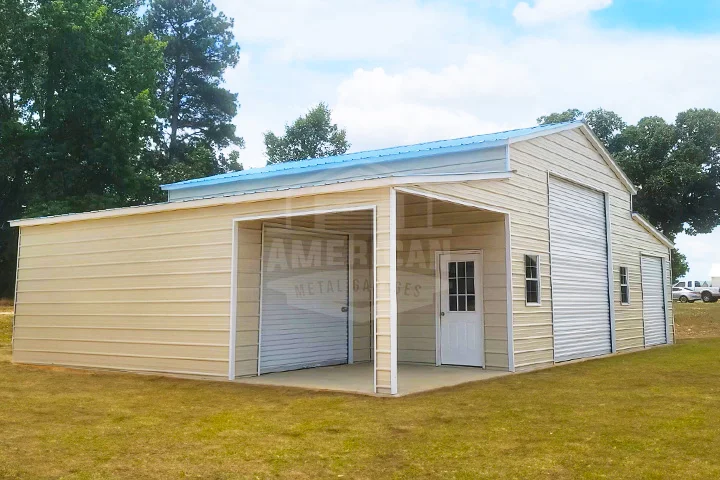





What Are Vertical Roof Panels—In Plain Terms?
Think of vertical roof panels like gutters that actually work. They run from the ridge straight down to the eaves, so water and debris have nowhere to sit. Everything drains off the way it should.
Horizontal panels, on the other hand, run side to side. They’re faster to install and very cost-effective. But in real-world conditions—especially where there’s tree cover or high humidity—they trap debris. Water pools. Gunk builds up. And over time, that means rust, leaks, and maintenance issues.
Do Vertical Roofs Really Last Longer?
Yes—and the difference can be decades.
Based on real installs across North Carolina, South Carolina, Virginia, Georgia, Kentucky, Tennessee, and West Virginia, vertical roofs have consistently shown better durability over time:
- They drain faster—nothing sits in the seams.
- They’re installed over stronger hat-channel framing.
- They handle snow loads and winds.
- They reduce UV exposure and leak risk with hidden fasteners (on premium systems).
Real-World Performance Breakdown
| Panel Type | Lifespan (Field Tested) | Maintenance Needed | Best For |
|---|---|---|---|
| Vertical Panels | 40–70+ years | Minimal – annual checkups | Humid, wooded, or storm-prone areas |
| Horizontal Panels | 20–40 years | Moderate – seasonal cleaning | Dry, open, low-debris regions |
Local Projects That Show the Difference
Greenville, SC – Custom Garage Build
A homeowner wanted a clean, low-maintenance garage building. We suggested vertical panels to prevent clogging from leaves. Three years later, the roof still looks new—no debris buildup, no staining, no issues.
Lexington, KY – Commercial Equipment Storage
A 40×60 unit needed to meet snow and wind load requirements. Vertical roofing helped the structure pass inspections and has stood strong through multiple storms with no drainage issues.
Roanoke, VA – Backyard Workshop
Pine trees surrounded the property, making horizontal panels a risky choice. We installed a vertical roof to keep debris moving off the surface. After two years, the owner says it’s stayed clean with virtually no upkeep.
What Brochures Don’t Tell You
Brochures love to quote “up to a 70-year lifespan”—but that’s in ideal conditions.
What they usually skip over:
- No shade or overhanging trees.
- Perfect roof pitch and drainage slope.
- Proper installation using the hat channel.
We’ve seen many buildings in the Southeast where horizontal panels rusted out in 10–15 years—not due to poor materials, but because they weren’t the right match for the climate.
When Vertical Panels Are Worth It
Go vertical if:
- You’re in the Southeast or Mid-Atlantic.
- You’ve got trees, snow, or heavy rain.
- You’re building for long-term use—garage, barn, shop, etc.
Stick with horizontal if:
- You live in a dry, open area with little debris.
- Budget is your top priority.
- You’re okay with regular upkeep.
Contractor’s tip: Don’t just Google it—ask the local crew what they’re putting on their buildings.
FAQs – Straight from the Field
How long do vertical roofs really last?
Installed right, they can easily last 50+ years. We’ve seen some going strong after 70.
Is horizontal always a bad idea?
Not at all—it just has limits. In dry, open areas, it works fine. But in tree-heavy or humid zones, it needs more attention.
Final Thoughts
If you want the building to last, go vertical. It sheds water, stays cleaner, and just holds up better when the weather hits.
PRO TIP: Budget builds save money now. Smart builds save money forever.